A practical guide to infant sleep environments
Choosing a Safer Crib Sleep Surface: What Families Should Check
A crib mattress is more than a comfortable place to rest. Its fit, firmness, condition, and construction all matter—and none of them replaces the basics of safe sleep. Here is how to assess a crib sleep surface, understand what certifications can and cannot tell you, and make sense of organic-material claims without losing sight of the most important checks.
A crib is a small landscape with firm boundaries: four sides, a mattress, and—when an infant is sleeping—very little else. The safest starting point is simple. Choose a firm, flat mattress designed for the specific crib, make sure it fits snugly, and cover it with a fitted sheet. Place the baby on their back for every sleep. Keep pillows, quilts, loose blankets, toys, positioners, and other soft objects out of the sleep space.
Those fundamentals matter whether a mattress is made with conventional materials or organic cotton, wool, or latex. Labels may help explain how materials were grown, processed, or tested, but an organic claim does not establish that a surface is suitable for an infant. Nor does a certification replace regulatory compliance, careful fit checks, or current safe-sleep guidance.
Begin with the sleep space, not the marketing
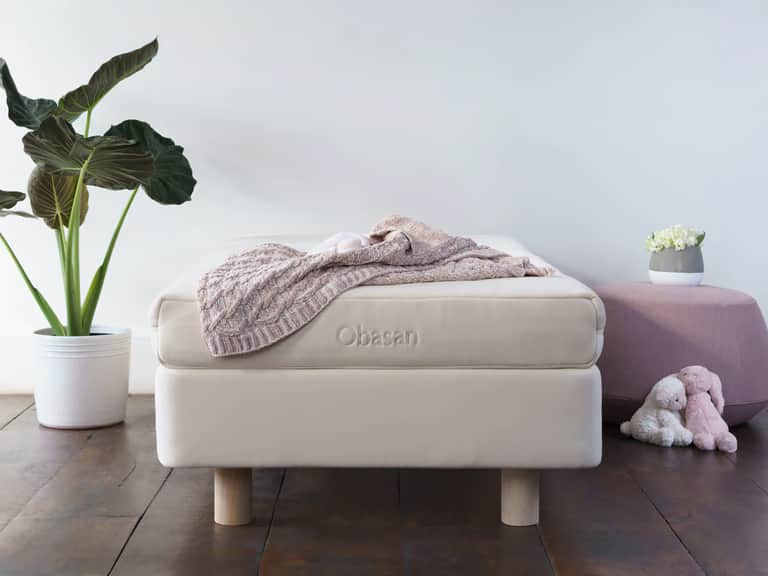
When families compare an organic baby mattress or conventional crib mattress, the first question is not whether it feels plush or promises a more natural night. It is whether the mattress is made for the exact crib and meets applicable safety requirements. A crib mattress should be firm and flat, with no visible sagging, soft spots, or raised areas. Its surface should remain level when the mattress is installed as directed.
Fit is equally important. A mattress that is too small can leave gaps between its edges and the crib frame, where an infant could become trapped. Check the crib and mattress instructions together, including any model or size information. Follow the manufacturer’s method for assessing fit and inspect the perimeter after the mattress is placed in the crib. It should sit securely without being forced, bowed, or wedged into position.
Do not rely on a general mattress dimension alone. Cribs and mattresses may differ, and measurements do not capture how the mattress actually sits inside a particular frame. If a gap is visible, if the mattress shifts substantially, or if the fit is uncertain, do not improvise with towels, foam strips, or another filler. Contact the crib or mattress manufacturer for guidance, and use a compatible sleep surface.
Firm and flat means more than a matter of taste
Adults often associate comfort with softness. For an infant, however, the sleep surface should be firm enough to maintain its shape and flat enough to avoid inclines or hollows. A mattress that feels welcoming to an adult hand may still be too soft for a baby. Follow the product instructions and applicable infant-sleep recommendations rather than judging suitability by showroom feel.
Avoid adding a topper, cushion, mattress pad, or extra layer to change the feel of a crib mattress. Even products described as breathable, natural, or designed for comfort can alter the sleep surface. A waterproof cover or protector should be used only when it is specifically compatible with the mattress and crib, fits securely, and is permitted by the manufacturer’s instructions. It must not create a soft, loose, or uneven layer.
This distinction is especially important when considering wool-filled pads or quilted toppers. Wool can have useful properties in bedding, including moisture management and temperature regulation, but those qualities do not make a padded layer appropriate for an infant’s sleep space. Keep the crib surface consistent with safe-sleep guidance: firm, flat, and free of added soft bedding.
Check construction, condition, and instructions
A useful review begins with the product itself. Identify the maker, model, intended age or use, dimensions, materials, and care directions. Read the manual and product label rather than relying only on a retailer’s summary. Confirm that the mattress is intended for a crib—not a play yard, bassinet, or older child’s bed—and that its dimensions match the crib manufacturer’s requirements.
- Inspect the surface: Look for tears, exposed filling, seams coming apart, lumps, depressions, or areas that no longer lie flat.
- Check the edges: Make sure the mattress retains its shape and sits securely against the crib sides.
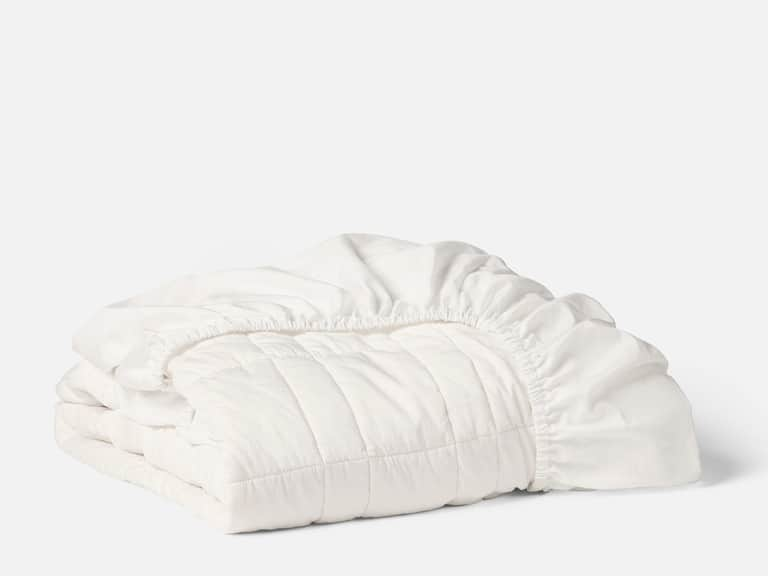
- Review the cover: Use only a fitted sheet that is made for the mattress size and stays in place without excess fabric.
- Follow cleaning directions: Confirm how the mattress may be cleaned and dried. Do not soak it or use unapproved treatments.
- Keep records: Save the model name, purchase details, care instructions, and any recall or safety notices.
Secondhand mattresses deserve particularly careful attention. Ask about their age, storage, cleaning, and use; check that they have not been damaged or altered; and look up the exact model for recalls or manufacturer guidance. A surface that is stained, damp, moldy, misshapen, or difficult to identify is not a good candidate for an infant’s crib. If its history is unknown or its fit cannot be confirmed, choose a mattress whose condition and compatibility can be verified.
What organic means—and what it does not mean
“Organic” is a claim about materials and production, not a complete description of a mattress’s safety or performance. A mattress may contain organic cotton, wool, or latex, but those materials can be combined with other components. The word alone does not say which parts are certified, what standard applies, or whether the finished product complies with the safety rules for its intended use.
Ask for component-level detail. Is the cover certified, the filling, the latex, or the complete product? Does the certification apply to the specific model being considered, and is the certificate current? A clear disclosure identifies materials and their locations in the product—for example, the cover, core, quilting, or barrier layer—rather than relying on a broad phrase such as “all natural.”
Certifications can make claims easier to examine, but their scopes differ. GOTS, or the Global Organic Textile Standard, addresses organic textile processing and related environmental and social criteria within its scope. GOLS, the Global Organic Latex Standard, concerns organic latex and its processing. OEKO-TEX programs evaluate specified substances or product attributes under their respective criteria; an OEKO-TEX label is not the same as an organic certification. Always verify what the particular certificate covers instead of treating different marks as interchangeable.
A certificate also does not answer every practical question. It does not by itself prove that a mattress fits a particular crib, is firm enough for infant use, is in good condition, or can be cleaned in a particular way. Nor does it mean that every component in a finished product has the same certification. Read the certificate details and the product’s own safety documentation together.
Separate safety compliance from material preferences
In the United States, crib mattresses are subject to federal safety requirements. Families should check that a product is intended for the relevant crib use and that the manufacturer provides appropriate compliance information. Rules vary by country, so shoppers elsewhere should consult the relevant consumer-safety authority. A seller’s use of words such as “chemical-free,” “non-toxic,” or “safe” is not a substitute for specific, verifiable compliance details.
Material choices may still matter to a family. Organic cotton, natural latex, or wool can appeal to people seeking particular sourcing or processing standards. The right way to evaluate those preferences is to ask precise questions: What is each layer made from? Where was it processed? Which independent standard, if any, verifies the claim? Is the evidence available for the exact model? These questions produce a clearer picture than a marketing headline.
Be cautious about claims that imply a mattress prevents allergies, guarantees better sleep, eliminates every potentially concerning substance, or protects a child from a health condition. A product description is not medical advice, and material choices cannot guarantee a particular health outcome. If a child has a diagnosed allergy or other medical concern, ask a qualified health professional for advice relevant to that child.
Keep safe-sleep practice in view
A suitable mattress is one part of a safer sleep environment. The American Academy of Pediatrics recommends placing infants on their backs for every sleep, on a firm, flat, non-inclined sleep surface intended for infants. The sleep area should be free of soft objects and loose bedding. Families should also follow current guidance from their local health authorities and the instructions for the crib and mattress.
Use a fitted sheet designed for the mattress and remove anything that does not belong in the sleep space. Do not add pillows, comforters, stuffed toys, positioners, or loose blankets. Avoid products that create an incline or claim to keep a baby in a particular position. A “breathable” label does not make an accessory necessary, and it does not override established safe-sleep recommendations.
Keep the sleep surface clear after each change of sheet or cleaning. Check that the sheet is snug and that no fabric has gathered into folds. If the mattress has a removable cover or a specialized waterproof layer, use it only as directed. Never add an improvised cover or protective material that could shift, bunch, or interfere with the mattress’s fit.
A measured approach to brands and product descriptions
A brand name can be a useful starting point for research, but it is not proof that every item in a product line has identical materials or certifications. When comparing a Naturepedic crib product, or any other manufacturer’s offering, look up the exact model and size. Check its construction, the scope of each certification, care instructions, and any stated safety compliance. Do not assume that a certification shown for one model applies to another.
The same care applies to products described as “organic crib mattresses.” That phrase can refer to an entire product, selected layers, or only a textile component. Ask the manufacturer to specify what is certified and to provide supporting documentation. If the response is vague, contradictory, or limited to general claims, treat that as a reason to continue researching rather than as confirmation.
A child’s mattress is not automatically suitable for an infant’s crib. Products designed for older children may have different dimensions, firmness, construction, or intended use. For example, a reversible children’s mattress with medium and firm sides is still a children’s product unless its manufacturer explicitly identifies it as appropriate for an infant crib and it meets the applicable requirements. Do not adapt or repurpose a mattress based on its materials alone.
Questions to ask before deciding
A short, concrete checklist can make comparisons more useful:
- Is this mattress expressly intended for the crib and age group in question?
- Does it match the crib manufacturer’s size and fit requirements?
- Is the surface firm, flat, intact, and free of sagging or soft additions?
- What materials are used in the cover, core, filling, and other layers?
- Which components are certified, under what standard, and for which exact model?
- What safety-compliance information and product documentation does the manufacturer provide?
- How should the mattress be cleaned, and what accessories are approved for use with it?
- Can the manufacturer confirm fit or answer questions about a particular crib model?
The clearest choice is the one you can verify
Choosing a crib sleep surface does not require decoding every detail of textile production. It does require separating essential safety checks from optional material preferences. Start with a compatible crib and mattress, confirm a snug fit, look for a firm and flat surface, and use only a fitted sheet. Then investigate composition, certification, care, and sourcing with the exact product information in hand.
For families drawn to organic materials, documentation can help distinguish a specific, verifiable standard from a broad environmental claim. But a certification is one piece of evidence, not a complete safety verdict. Keep the sleep space simple, follow current infant safe-sleep guidance, and consult the manufacturer or a qualified health professional when a question falls outside the product label.
In the quiet geometry of a crib, the most important features are often the least dramatic: a level surface, a secure fit, sound construction, and nothing loose around the sleeping baby. Those checks offer a practical foundation for evaluating any crib mattress—organic or otherwise.